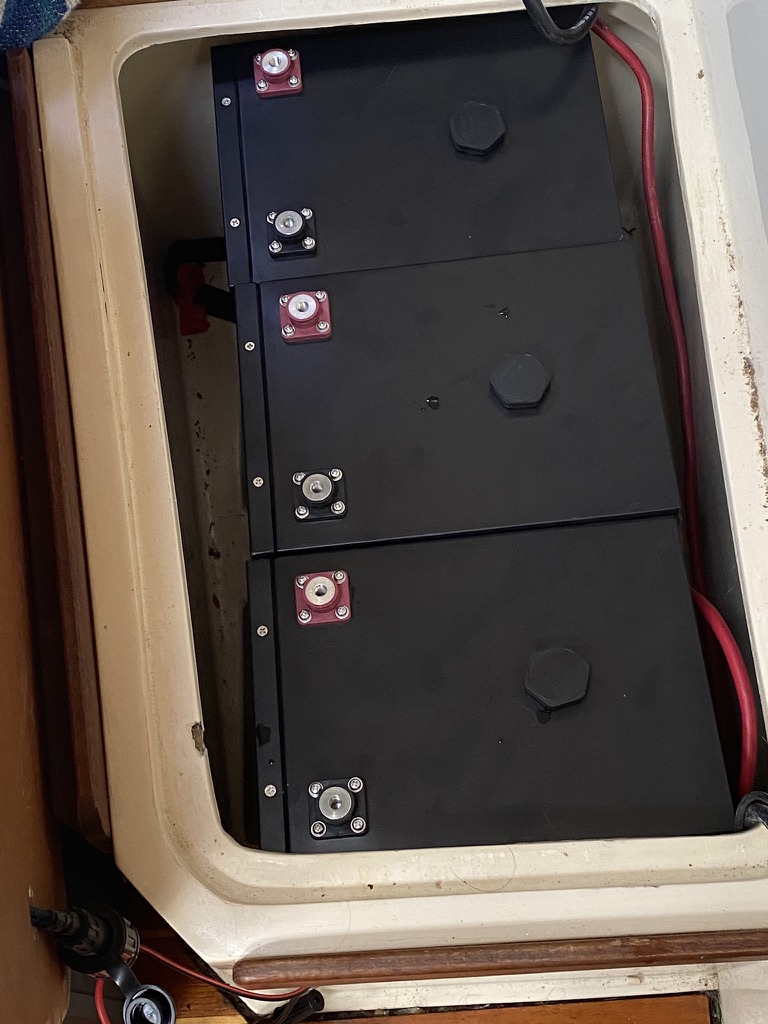
When we first purchased Reliant she had some battery issues. One clue was the “spare battery” the previous owner kept in the cockpit. Although I now have two spare batteries bouncing around the cockpit so that may not have been a clue.
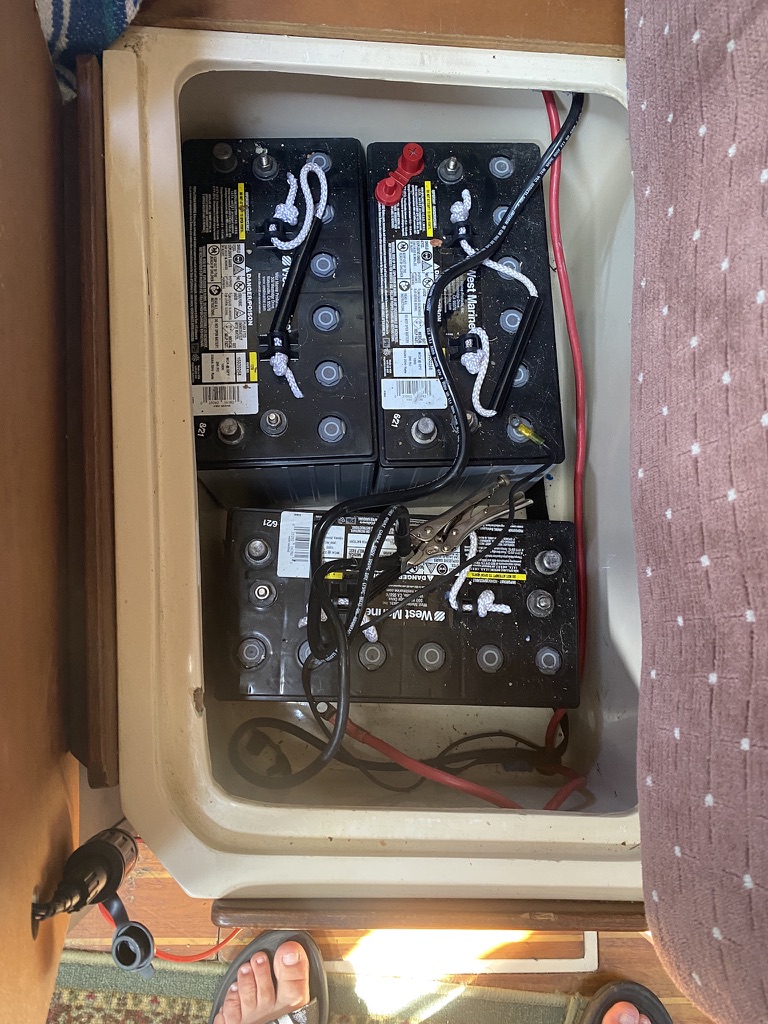
We ended up replacing the two AGM batteries with AGM replacements that first summer we had her, and then shortly after that I added a 3rd. 300 amp hours of AGM and that worked exceptionally well with the tiny bit of electricity we were using. Essentially lights, electronics, and the fridge.
Then came the summer of 2022 when our alternator became disconnected and we drained our batteries down to zero. Way down past the safe discharge and they really and truly died.
I realized my mistake and we milked the batteries along for another six months, essentially running mostly on solar with the batteries not doing much of anything.
St. Augustine for the winter was the opportunity we needed to finally replace our batteries and if we were doing that it was time to upgrade to Lithium.
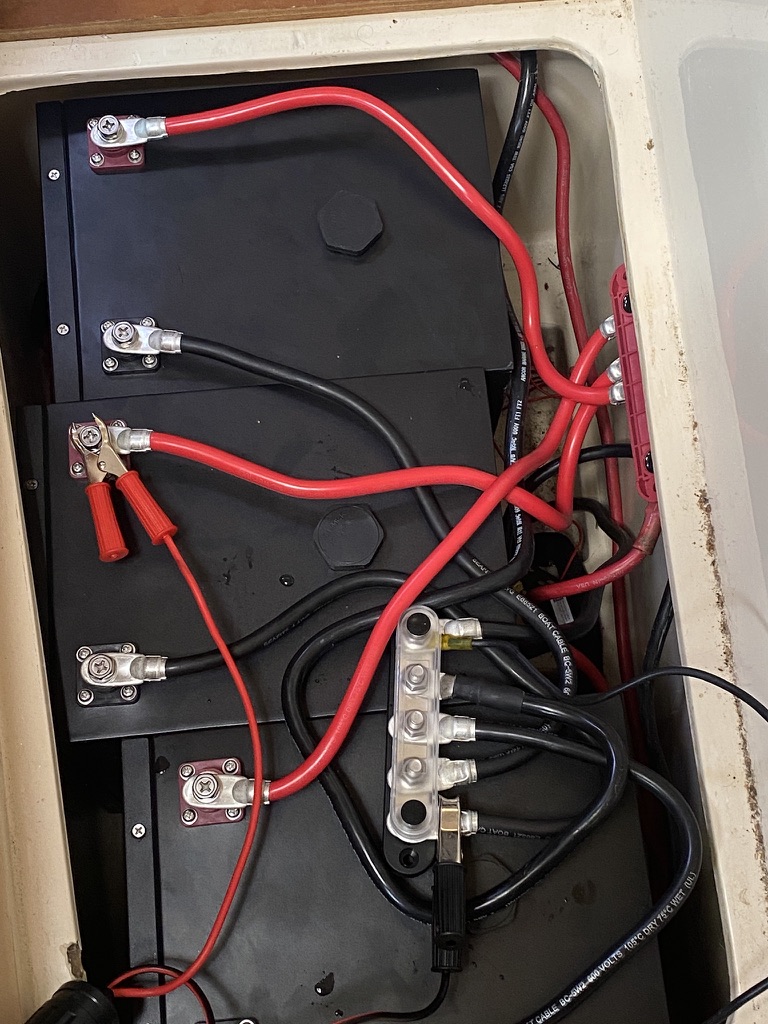
The first step was to replace our solar charge controllers with Victron Smart Controllers which will talk to each other via Bluetooth so that you can maximize the power from each solar panel. The plan was to put a whole lot of AH in so maximizing the solar efficiency was important.

Then since we weren’t running the engine it was a simple swap out.
With that done the next step was to install additional electrical components. We mounted our DC to DC charger and the 500 watt inverter in the locker by the navigation station.
We then looked for a place to secure a starting battery for the engine. Key for us is that I want to replace the engine as soon as I can afford to with a 10KW electric engine so I don’t want to go too crazy with a starting battery.
Instead we placed it in the cockpit locker and ran the cable down to the engine compartment to an A/B switch were in a pinch we could connect back to the house bank. Really the main purpose though was that I was too lazy to remove that wire from the engine to the electrical panel and in this way it was essentially capped there without needing to worry.

It was then time to wire in the DC to DC charger so the alternator could charge the house bank and to connect up the inverter so we can use Starlink when at anchor.
All and all it was a massive success. The only disappointment was that the inverter isn’t strong enough to power the Icemaker. But that’s a project for another day.
Now that we’ve been at anchor for almost a week I can’t say enough about how magical the lithium conversion has been. I can’t imagine running out of power, even with only 300 watts of solar. The batteries just soak up the solar and last so very long. It’s such a wild difference.
 From The Galley