
We decided to make our way to Provincetown early for a few reasons. Mostly though because we weren’t sure when Liam’s job would start and we thought rather than bounce between anchorages we’d head to Provincetown as early as possible. So that was the beginning of May.
We’re usually much farther south in May. And this year on May 22nd there was a rare late season nor’Easter. A nor’easter is typically a winter storm and as you can guess from the name the winds of interest are the ones that come from the north east.

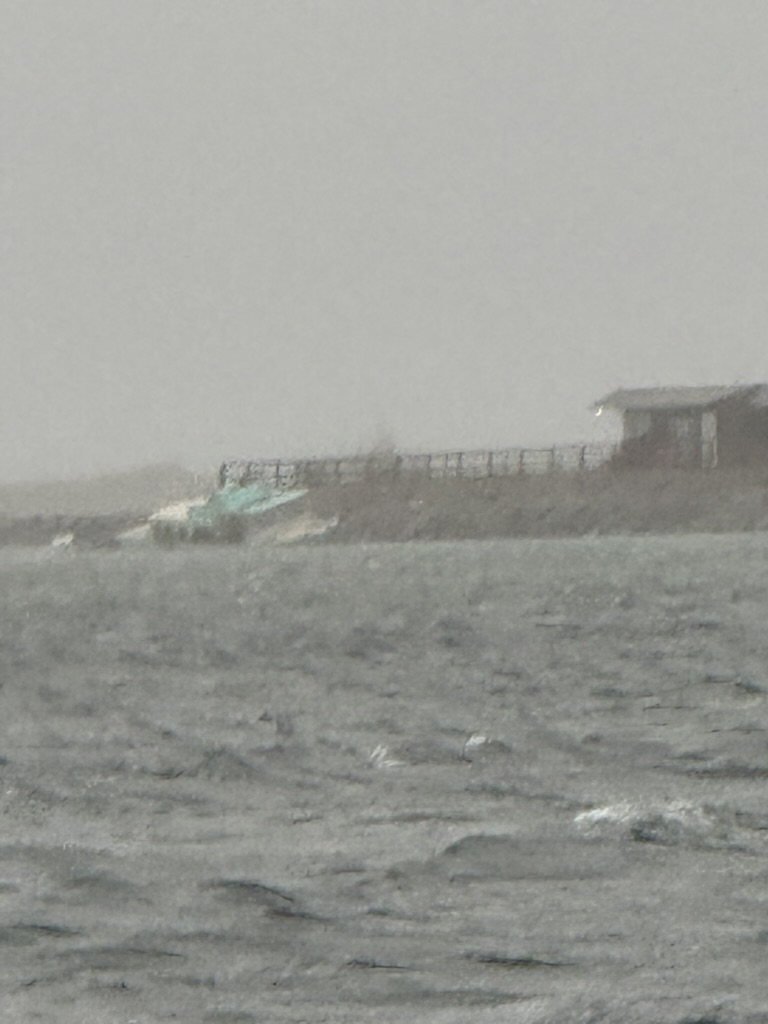
The storm started Thursday morning, built to a height at 10 at night with winds over 60 knots and waves 4-6 feet high rolling through the mooring field. Several boats were lost and even more were rescued from the sands after being blown off their moorings.
So what did we do to keep safe, what mistakes did we make that I won’t make again, and how can we be proactive in the future.
Storm Prep: The first was storm prep, when 60 knot winds are expected it’s important to roam the boat and take care of things that can catch the wind. We took down the flags, strapped everything down that might fly off, and tied some extra lines to the dinghy. I did forget to take the dinghy’s solar panel off and bring it below so we lost that, and I had completely forgotten about the loose solar panels that were under the active one on the dodger so we lost those too.

Next is to check the lines. If tied to a dock you’ll want to add fenders and lines, if at anchor you will want to let out more chain to increase your scope, and on a mooring it’s best if it’s a ball you have confidence in and you should add chafing gear if you don’t already have it on and ensure that your tie to the mooring won’t come loose. Several of the boats that lost their moorings the lines just slipped off. So really ensuring they are on there in a way that won’t have them pop off as the boat moves. We use extra lines to cleat over the mooring lines to really secure them.

During the Storm: We say on the boat and keep an active watch. For this storm I did checks every 30 minutes or so when the wind was over 30 knots. I should have set the anchor alarm, even with us being on the mooring, and I should have paid better attention to our neighbors. We had the radio on and were comforted by the chatter from the harbormaster’s office and the local Boat Tow company who were both out and coordinated as a single effort through the storm. They did rounds before the storm to check on boats, then patrolled the field during the storm and rescued several boats adrift moving to them to new moorings and having someone secure and sit with a boat that landed safely on the sand.

After the storm: Not going to lie. One of the first things I did after the water was flat and the wind was gone was to find my way to shore and have a Gin and Tonic, actually had a double. After that we had some pickup to do. We had been bounced around as if it had been an offshore passage so in retrospect we should have prepped as if we were going offshore better. I also was able to find where on the harbor’s floor our missing solar panels landed. I tagged them with GPS on the chart and will dive for them after the water warms up a bit more. We then ordered a replacement for the dinghy’s solar panel so we could work on that well.
Just a few reminders. Even when you are settled and not planning a passage, even if staying at a marina, it’s important to watch the weather and have your eye on the forecast every day.
 From The Galley